
Senua’s Saga: Hellblade II – The Pinnacle of Cinematic Psychological Horror
When Ninja Theory released Hellblade: Senua’s Sacrifice in 2017, it was hailed as a landmark achievement in “Independent AAA” gaming—a title that tackled the heavy themes of psychosis with a level of care and technical prowess rarely seen in the industry. Now, in 2026, the legacy continues with Senua’s Saga: Hellblade II.
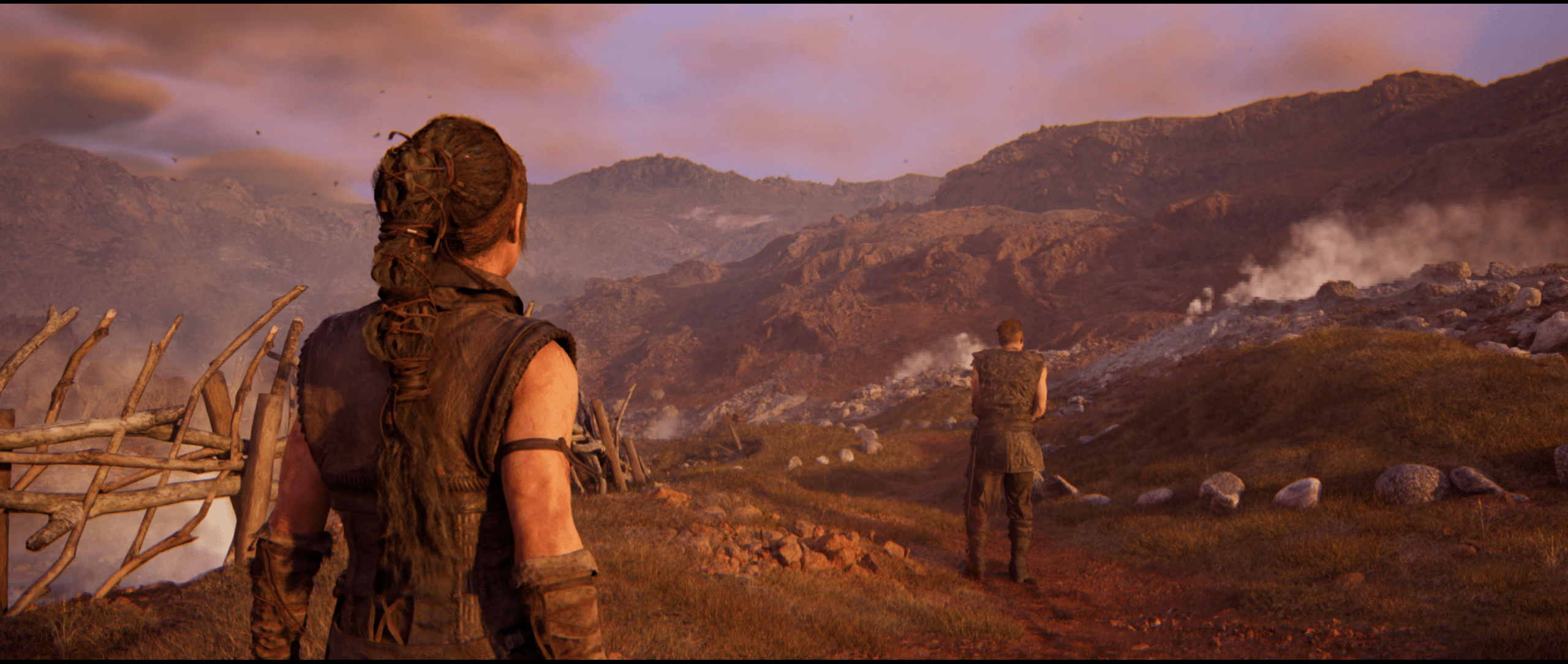
While the game initially launched in May 2024 for Xbox and PC, the recent August 2025 PlayStation 5 release and the subsequent 2026 “Enhanced” Update have solidified its place as the definitive visual and auditory showcase of this console generation. Hellblade II isn’t just a sequel; it is a harrowing, six-to-eight-hour descent into the heart of 10th-century Iceland, blurring the lines between myth, reality, and the fractured mind of its protagonist.
A Visual Revolution Powered by Unreal Engine 5
The most immediate and undeniable aspect of Senua’s Saga: Hellblade II is its presentation. Ninja Theory has pushed Unreal Engine 5 to its absolute breaking point, creating what many critics consider the most realistic-looking video game ever made.
Nanite and Lumen Technology
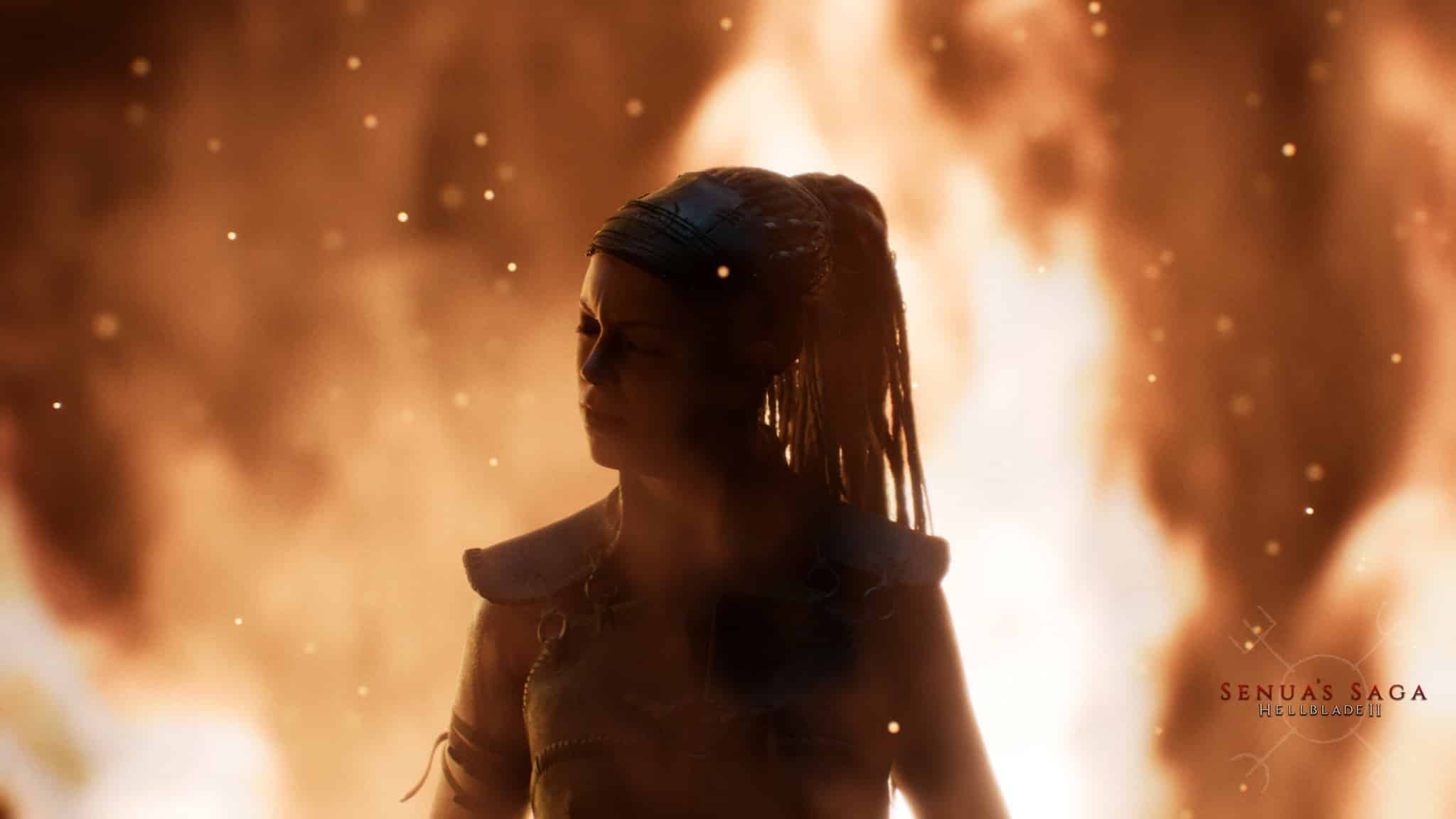
By utilizing UE5’s Nanite geometry system, the developers were able to import film-quality photogrammetry scans of Icelandic landscapes. Every jagged volcanic rock and mossy cliffside is rendered with billions of polygons, virtually eliminating “pop-in” and jagged edges.
Complementing this is Lumen, the real-time global illumination system. Whether it’s the flickering torchlight in a claustrophobic cave or the oppressive, gray light of a storm-battered coast, the lighting reacts dynamically to the environment, creating an atmosphere that is as beautiful as it is terrifying.
The Face of Trauma: MetaHuman Performance
Melina Juergens returns as Senua, and her performance—powered by MetaHuman technology—is a masterclass in digital acting. The subtle micro-expressions, the way her eyes track imaginary voices (The Furies), and the sheer physical agony visible in her face during combat elevate the character to a level of realism that makes the experience feel more like a high-budget arthouse film than a traditional game.
Evolution of Combat: Every Fight Tells a Story
One of the most significant changes in Hellblade II is the philosophy behind its combat. While the first game occasionally felt like a traditional hack-and-slash, the sequel leans into a “cinematic muscularity.”
1. One-on-One Intimacy
Combat is strictly one-on-one. You won’t find yourself surrounded by mobs of generic enemies. Instead, each encounter is a desperate, weighted duel. When an enemy is defeated, the camera seamlessly transitions to the next foe, often through a scripted cinematic event that makes the entire battle feel like a continuous, unedited shot.
2. The Focus Mechanic
The Focus ability returns, allowing Senua to slow down time and unleash a flurry of strikes. In the 2026 Enhanced Edition, this has been refined with new visual cues, making it easier to tell when your meter is charged through the intensity of the “Furies” whispering in your ears.
3. Accessibility and Automation
In a bold move for an action game, Ninja Theory included Self-Play modes. If you are purely interested in the narrative and the psychological journey, you can automate attacks or parries, effectively turning the combat into a choreographed interactive cinematic.
Narrative Depth: From Self-Discovery to Saving Others
While the first game was an internal journey focused on Senua’s grief for her lost lover, Dillion, Senua’s Saga: Hellblade II sees her attempting to help those around her.
She travels to Iceland to confront the slavers who have been terrorizing her people. Along the way, she encounters a cast of “damaged” individuals who act as mirrors to her own trauma. These characters are not just NPCs; they represent different facets of the human condition—fear, rage, and the hope for redemption.
The Role of Psychosis
The game continues its partnership with mental health experts and people with lived experience of psychosis. The Binaural Audio (3D sound) is mandatory for the full experience. Wearing headphones is not a suggestion; it is a requirement to hear the Furies as they debate, mock, and occasionally guide you through the darkness.